Welcome to our bi-weekly Club of Amsterdam Journal. Prof. Dr. Nicolas Hardinghaus, President and CEO, Hansa Real Consultants, C.A. and speaker at our next event:
"What could we understand as values of capitalism? Profitability? Pecuniary rewards? Financial independence, even might? Associated to virtues as self determination, valour, bravery, guts? Are these values suffering alteration in or after the financial markets crisis? Turn to greed and frivoulness? Which will be the foreseeable consequences: Regulation instead of deregulation, public ownership instead of private ownership, supervision instead of laissez-faire. Rebirth of state intervention. Consequences for the so called real economy. Don't make money with money. Is a return to the former, the "old" system ("ancient regime") thinkable? Another Bretton Woods? Another Gold Or Commodities Standard? After the downfall of the "real existing socialism", is now the end of capitalism in sight? Money and Mystery, money and eschatological prophecy. Cool down or the ultimate collapse of world finance system? Outlook. "
In case you would like to hear more and also share your thoughts, visit our next event about the future of Values in Business on November 20. Felix Bopp, editor-in-chief
2020 Future seen from 2015: Futurist Mobile World Next Event Club of Amsterdam blog News about the Future Wearable Technology A Federated Model for a New Economy Recommended Book Copenhagen Consensus 2008 Futurist Portrait: Derek Woodgate Agenda Club of Amsterdam Open Business Club Submit your article Contact Subscribe/Unsubscribe
Dr Patrick Dixon is often described in the media as Europe's leading Futurist and has been ranked as one of the 20 most influential business thinkers alive today (Thinkers 50 - 2005). Chairman of Global Change Ltd,
the future of Values in Business Thursday, November 20, 2008 Registration: 18:30-19:00, Conference: 19:00-21:15 Tickets Where: IBM Forum Amsterdam, Headquaters IBM The Netherlands, Johan Huizingalaan 765, 1066 VH Amsterdam The conference language is English. Supporter: IBM The event is part of the Global Entrepreneurship Week Our speakers are Giuseppe Bruni, IBM Global CEO Study 2008 Program Director, Business Strategy Consultant CEO Study 2008 Small and Medium Business Point of View Annegien Blokpoel, founder and managing director, PerspeXo and author "Maak je bedrijf meer waard" Increase the value of your company Nicolas Hardinghaus, President and CEO, Hansa Real Consultants, C.A. Strategies for Growth Moderated by Paul Hughes, Strategic Director and Partner of Lava graphic studios, Coach to the Creative Class
Club of Amsterdam blog http://clubofamsterdam.blogspot.com September 10: EFMN correspondents day 2008: Weak Signals in Foresight September 10: IBC FCPUG SuperMeet June 9 : Pakistan in the 21st Century: Vision 2030 May 24: Beyond Innovation May 24: What future coal?
MOBILITY
mindset mindset is an independent concept in the area of electro and hybrid automobiles. Neither a city car, nor an SUV or a sports car. mindset is as unique as it is self-explanatory: a light, powerful and efficient commuter for those day-to-day journeys. Its high heels (i.e. its large, slim wheels) take the aerodynamic coupé body up to eye level with the main traffic. Whether alone, or in company, with babies and bags, cats and dogs you can get in and out easily and keep an eye on whats going on whilst moving on swiftly and pleasantly. Its calm appearance projects power without aggression. Thats what mindset understand by a contemporary hybrid automobile.
Honda Unveils New Robot Walker Honda Motor Company has displayed for the first time a new computerized walker machine, designed to help factory workers and the elderly.
The machine which weighs 6.5 kilos, has a saddle, leg-frames and shoes. It reduces the weight of a user's legs making it easier to climb and descend stairs, as well as carry out difficult crouching positions.
A user sits on the saddle puts on the shoes, and pushes a start button, which then moves the users legs. The device is driven by a computer, has a motor and gears, and battery powered sensors that respond to a user's movements.
Honda says it will start using the machine at a factory in Japan.
The device is also expected help elderly people. Japan has a rapidly aging population and also leads the world in robot technology.
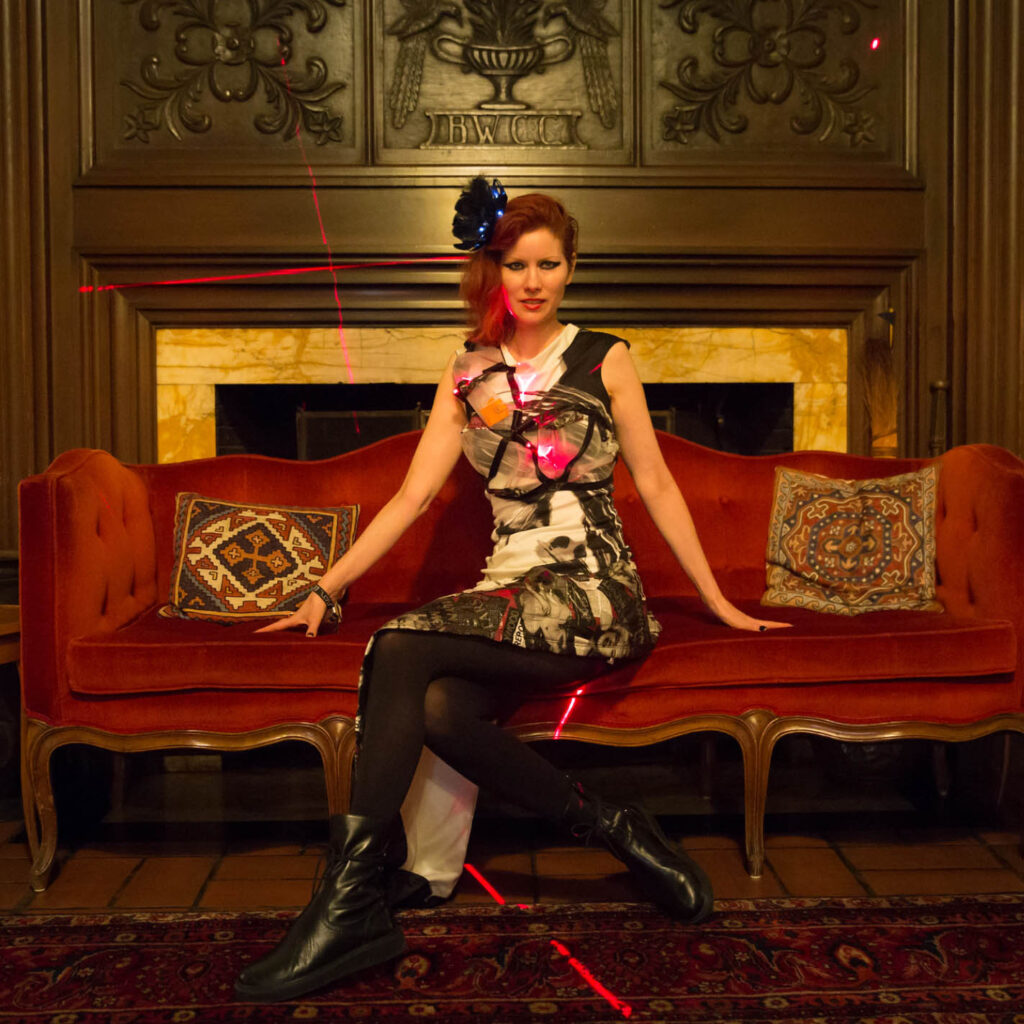
"At CuteCircuit we are working on making technology that is more usable, emotionally fulfilling, and fun! We think that wearables will be the future tool for personal communication. Like a dynamic surface around our bodies able to connect us to people and places. The most used communication tool today is the mobile phone, we believe that the wearable technology and the telecommunication market will merge in a not very distant future. Many of our wearables are compatible via Bluetooth with mobile phones, this allows for a faster deployment and adoption of this technology. CuteCircuit wearables are beautiful and pleasant to wear: no loose wires, no hard shells, and no backpacks full of batteries or visible technology (unless for decoration). We pay great attention to details and technological solutions in a sartorial view of technology. For each project you will see highlights of the design process that will help identify the skills and methodology that our team applied during the development of the product. The wearable technologies that we develop are RoHS compliant, it means that no lead or mercury are present in the garments. We design technology that is safe for both the wearer and the environment." Projects PLEAT PLEAT is a collection of garments featuring hand-made heat-formed textiles. The collection features a waterproof jacket, with a layer of pleated organza covering a sleeve and part of the front, a pleated dress where the pleats can be reversed to make the dress more or less tight on the body, and a skirt, embroidered with heat-formed pockets. The heat-formed textiles reatain their shape even when they are stressed by daily use of the garments or after washing. Hug Shirt The Hug Shirt is a wearable Bluetooth accessory for your mobile phone. The Hug Shirt allows to exchange the physical sensation of being hugged over distance through telecommunication networks. KineticDress The KineticDress is part of the Transfor-Me collection developed for the NEMO Science museum in Amsterdam. The KineticDress changes color and pattern depending on the activity of the wearer. Skirteleon The Skirteleon is part of the Transfor-Me collection developed for the NEMO Science museum in Amsterdam. The Skirteleon changes color and pattern on-demand depending on the activities and mood of the wearer during the course of the day. Mystique The Mystique Dress is part of the Transfor-Me collection developed for the NEMO Science museum in Amsterdam. The Mystique Dress changes shape and color depending on the time of the day increasing in length from morning to night. A-Nerve The Accessory Nerve is a Bluetooth wearable accessory for mobile phones. When the Accessory Nerve receives an incoming call the fabric pleats on the sleeve change pattern. Embedded Theater Embedded Theater is a wearable augmented-reality device. The Embedded Theater analyzes the user location and direction of sight and the system delivers audio narrative and navigational information.
CuteCircuit wearables are beautiful and pleasant to wear: no loose wires, no hard shells, and no backpacks full of batteries or visible technology (unless for decoration). We pay great attention to details and technological solutions in a sartorial view of technology.
For each project you will see highlights of the design process that will help identify the skills and methodology that our team applied during the development of the product.
The wearable technologies that we develop are RoHS compliant, it means that no lead or mercury are present in the garments. We design technology that is safe for both the wearer and the environment." Projects PLEAT PLEAT is a collection of garments featuring hand-made heat-formed textiles. The collection features a waterproof jacket, with a layer of pleated organza covering a sleeve and part of the front, a pleated dress where the pleats can be reversed to make the dress more or less tight on the body, and a skirt, embroidered with heat-formed pockets. The heat-formed textiles reatain their shape even when they are stressed by daily use of the garments or after washing.
Even at that time, it was clear that the credit expansion - unfolding without proper safeguards and based only on an unfounded sense of trust - was unsustainable. This led to the provocation: What will happen when it all finally collapses and people no longer trust the institutions charged with managing the economic system, nor value the currencies they promote?
Current trends in the housing markets in the US and elsewhere have exposed the weaknesses in the fiat monetary system in place since the collapse of the Bretton-Woods system. Investors are increasingly looking at other alternatives to currencies, such as precious metals.
As trends continue, the current economic system will collapse. This will result in mistrust among the general public for what they perceive to be currencies with an arbitrary dictated value, as well as a mistrust of the overarching establishments which govern those currencies. There will be a need for a universal currency, which is directly aligned to society who will use it and can evolve with the society as well. Precious metals, although having some practical applications, have a value based on physical scarcity which is less and less relevant in an increasingly virtual and data-driven world. Water on the other hand is predicted to become increasingly scarce and is also necessary for human survival, but it is not easily portable. The new currency will become the skills and knowledge people possess. Skills and knowledge can be acquired and services based on them can be provided to others. People sharing the same skill sets will have an understanding of the quality, or value of the skills an individual possesses. But people not involved in that area, will not have such a clear understanding of this. In order for them to grasp it without having to delve into that particular industry or field, they will have to rely on the opinion of someone they trust to validate it. This is no different to the way transactions occur in the world today. Organic societies of people with similar skill sets will be formed. These people can vouch for the other members of the society and thereby develop reputations and trust in the value the claim to have. Interaction with other societies to trade from other services will happen through a so-called trusted "weak link", which is the basis for social networks such as LinkedIn or Facebook. Although such a system works well in small numbers, it is difficult to expand it over a global economy as there are limitations to the amount of relations a single person can maintain and there would be an excessive time delay when hopping across weak links to get to the desired society. The ability for technology to manage such relations would allow for the development of a Federated Model for a New Economy. Rather than having to rely on specific weak links, societies can agree on terms for establishing a common baseline to gauge the values for their different skill sets. This way someone in one society can have a trusted rating of the quality of those skills. With such an integrated baseline, a common system of credits can be established with which to "pay" for services. As these credits are not backed by a physical standard, someone could "invent" credits they don't have to pay for services. But this kind of fraud would have a detrimental affect on the society someone belongs to, and their own ratings would suffer as their reputation did. For this reason, it would be in their best interests to find the culprit and remove them from their society, essentially placing them in an economic exile. To mitigate this, the same technology that maintains the credit system would also ensure completely transparent transactions across societies and people. People would of course belong to any number of societies, as value creators, consumers and residents, with each society being federated across others (Fig 1). It would be extremely difficult for a single individual to be able to keep on top of the various interactions and societies. They might take on the services of a professional to manage their "investments", that is the societies they choose to belong to and the associated costs for remaining there. Figure 1: Federated Model for a New Economy Such a federated system is extremely democratic, and the same technology used for maintaining the credit and transactions system would make referendums feasible. Such referendums would allow individuals to have a direct say in negotiating the terms, maintaining and policing the interactions their society has with other societies through the federated model. It would be useful in managing how individuals manage or remain part of a particular society. As the management of such interactions become increasingly complex, people might not want the burden of having to participate in all the referendums which may apply to them. To manage this, representatives can be elected at all the various societal levels where such a representation makes sense. This removes the need for "nations" based on physical locations; every individual would be sovereign and be able to choose which societal associations to make. As people would also belong to a society of consumers, the brand will grow to target all aspects of a consumer society. Producers would no longer exist alone, but would partner with others to complete the brand landscape for a consumer society. As consumer societies can grow, merge and evolve, so too would the brands that relate to them. The complete flexibility created in the consumer and producer societies would be somewhat limited in the resident societies since individuals have to physically live somewhere. Movement is virtual in the consumer and producer societies, whereas physical movement in resident societies has an additional cost which may be limiting. Nevertheless, the ability for a particular resident society itself to grow, evolve and relate with others would be based on true communal similarities and benefit, not archaic national divisions. In the future, as now, skills and knowledge will be of ultimate value. The collapse of the existing economy will introduce a lack of trust in the current currency system and its governing bodies. This will give rise to skills and knowledge being the new global currency. With the application of technology and the newly defined currency, traditional localised trust-based economies can be extended to a global federated model. Such a model would allow for a truly democratic representation of the individual and the freedom to belong and associate with a society of their choice. Consumer societies will define the target that producers wish relate to and in turn producers will align together to provide an entire brand landscape or them. And finally, resident societies will form relate with one another for true communal benefit.
As trends continue, the current economic system will collapse. This will result in mistrust among the general public for what they perceive to be currencies with an arbitrary dictated value, as well as a mistrust of the overarching establishments which govern those currencies.
There will be a need for a universal currency, which is directly aligned to society who will use it and can evolve with the society as well. Precious metals, although having some practical applications, have a value based on physical scarcity which is less and less relevant in an increasingly virtual and data-driven world. Water on the other hand is predicted to become increasingly scarce and is also necessary for human survival, but it is not easily portable.
The new currency will become the skills and knowledge people possess. Skills and knowledge can be acquired and services based on them can be provided to others. People sharing the same skill sets will have an understanding of the quality, or value of the skills an individual possesses. But people not involved in that area, will not have such a clear understanding of this. In order for them to grasp it without having to delve into that particular industry or field, they will have to rely on the opinion of someone they trust to validate it. This is no different to the way transactions occur in the world today.
Organic societies of people with similar skill sets will be formed. These people can vouch for the other members of the society and thereby develop reputations and trust in the value the claim to have. Interaction with other societies to trade from other services will happen through a so-called trusted "weak link", which is the basis for social networks such as LinkedIn or Facebook.
Although such a system works well in small numbers, it is difficult to expand it over a global economy as there are limitations to the amount of relations a single person can maintain and there would be an excessive time delay when hopping across weak links to get to the desired society. The ability for technology to manage such relations would allow for the development of a Federated Model for a New Economy.
Rather than having to rely on specific weak links, societies can agree on terms for establishing a common baseline to gauge the values for their different skill sets. This way someone in one society can have a trusted rating of the quality of those skills. With such an integrated baseline, a common system of credits can be established with which to "pay" for services.
As these credits are not backed by a physical standard, someone could "invent" credits they don't have to pay for services. But this kind of fraud would have a detrimental affect on the society someone belongs to, and their own ratings would suffer as their reputation did. For this reason, it would be in their best interests to find the culprit and remove them from their society, essentially placing them in an economic exile. To mitigate this, the same technology that maintains the credit system would also ensure completely transparent transactions across societies and people.
People would of course belong to any number of societies, as value creators, consumers and residents, with each society being federated across others (Fig 1). It would be extremely difficult for a single individual to be able to keep on top of the various interactions and societies. They might take on the services of a professional to manage their "investments", that is the societies they choose to belong to and the associated costs for remaining there.
Figure 1: Federated Model for a New Economy Such a federated system is extremely democratic, and the same technology used for maintaining the credit and transactions system would make referendums feasible. Such referendums would allow individuals to have a direct say in negotiating the terms, maintaining and policing the interactions their society has with other societies through the federated model. It would be useful in managing how individuals manage or remain part of a particular society.
As the management of such interactions become increasingly complex, people might not want the burden of having to participate in all the referendums which may apply to them. To manage this, representatives can be elected at all the various societal levels where such a representation makes sense. This removes the need for "nations" based on physical locations; every individual would be sovereign and be able to choose which societal associations to make.
As people would also belong to a society of consumers, the brand will grow to target all aspects of a consumer society. Producers would no longer exist alone, but would partner with others to complete the brand landscape for a consumer society. As consumer societies can grow, merge and evolve, so too would the brands that relate to them.
The complete flexibility created in the consumer and producer societies would be somewhat limited in the resident societies since individuals have to physically live somewhere. Movement is virtual in the consumer and producer societies, whereas physical movement in resident societies has an additional cost which may be limiting. Nevertheless, the ability for a particular resident society itself to grow, evolve and relate with others would be based on true communal similarities and benefit, not archaic national divisions.
In the future, as now, skills and knowledge will be of ultimate value. The collapse of the existing economy will introduce a lack of trust in the current currency system and its governing bodies. This will give rise to skills and knowledge being the new global currency. With the application of technology and the newly defined currency, traditional localised trust-based economies can be extended to a global federated model. Such a model would allow for a truly democratic representation of the individual and the freedom to belong and associate with a society of their choice. Consumer societies will define the target that producers wish relate to and in turn producers will align together to provide an entire brand landscape or them. And finally, resident societies will form relate with one another for true communal benefit.
How to Measure Anything: Finding the Value of "Intangibles" in Business by Douglas W. Hubbard (Author) From market forecasts to information technology risks to financial reporting, How to Measure Anything reveals the power of measurement to our understanding of business and the world at large. This insightful and eloquent book will show you how to measure those things in your own business that, until now, you may have considered "immeasurable," including customer satisfaction, organizational flexibility, technology risk, and technology ROI. With case studies ranging from how a marine biologist measures the population of fish in a large lake to how the United States Marine Corps found out what really matters in forecasting fuel requirements for the battlefield, readers are introduced to a "universal approach" to measuring "intangibles," along with some interesting methods for particular problems.
The Copenhagen Consensus exercise started as a simple but untested idea of prioritizing global opportunities. In 2004, the process was carried out for the very first time and ended with a successful list, compiled by some of the worlds top economists, attracting attention from all over the world. Since 2004, the Copenhagen Consensus Center has carried out several similar exercises, e.g. for UN ambassadors in 2006 and in Latin America. The ambition is to carry through a global Copenhagen Consensus exercise every fourth year similar to the Olympics. This ensures that new, important challenges and solutions are included in the process and that research is updated. Copenhagen Consensus 2008 The expert panel of 8 economists, including 5 Nobel Laureates, ranked the following list: Solution Challenge 1 Micronutrient supplements for children (vitamin A and zinc) Malnutrition 2 The Doha development agenda Trade 3 Micronutrient fortification (iron and salt iodization) Malnutrition 4 Expanded immunization coverage for children Diseases 5 Biofortification Malnutrition 6 Deworming and other nutrition programs at school Malnutrition & Education 7 Lowering the price of schooling Education 8 Increase andimprove girls schooling Women 9 Community-based nutrition promotion Malnutrition 10 Provide support for womens reproductive role Women 11 Heart attack acute management Diseases 12 Malaria prevention and treatment Diseases 13 Tuberculosis case finding and treatment Diseases 14 R&D in low-carbon energy technologies Global Warming 15 Bio-sand filters for household water treatment Water 16 Rural water supply Water 17 Conditional cash transfers Education 18 Peace-keepingin post-conflict situations Conflicts 19 HIV combination prevention Diseases 20 Total sanitation campaign Water 21 Improving surgical capacity at district hospital level Diseases 22 Microfinance Women 23 Improved stove intervention Air Pollution 24 Large, multipurpose dam in Africa Water 25 Inspection and maintenance of diesel vehicles Air Pollution 26 Low sulfur diesel for urban road vehicles Air Pollution 27 Diesel vehicle particulate control technology Air Pollution 28 Tobacco tax Diseases 29 R&D and mitigation Global Warming 30 Mitigation only Global Warming
The Copenhagen Consensus exercise started as a simple but untested idea of prioritizing global opportunities. In 2004, the process was carried out for the very first time and ended with a successful list, compiled by some of the worlds top economists, attracting attention from all over the world. Since 2004, the Copenhagen Consensus Center has carried out several similar exercises, e.g. for UN ambassadors in 2006 and in Latin America.
The ambition is to carry through a global Copenhagen Consensus exercise every fourth year similar to the Olympics. This ensures that new, important challenges and solutions are included in the process and that research is updated.
Copenhagen Consensus 2008 The expert panel of 8 economists, including 5 Nobel Laureates, ranked the following list:
Derek Woodgate, President, The Futures Lab, an international Futures-based consultancy. With experience as an executive on the board of two major corporations and over 15 years Senior Vice-President-level management and operational responsibilities in international businesses, Derek is widely recognized as a global specialist in marketing, innovation, business and futures-based consulting. He is currently on the Board of The American Center for Entrepreneurship, and on the Operating Committee of the Digital Convergence Initiative. In January 1998, Derek set up The Futures Lab, a futures-based consultancy, specializing in leveraging future potential, innovation, category redefinition and repositioning of major brands and businesses. The Futures Lab has helped many major global corporations across a myriad of categories. Derek has lived and worked in eleven countries and is at home in seven languages (English, Croatian, French, Italian, Bulgarian, Russian and Dutch). He graduated with a Bachelor Degree (Hons.) from University College London, in Contemporary Slav Studies and then gained his Masters in Economics (concentration in politics) from Zagreb University, a city where he spent over ten years. He is a frequent conference speaker, panelist and commentator on the future, particularly with regard to the changing global economy, emerging industries, youth culture and marketing and its relevance to the future business landscape. Derek is a prolific writer on future-related topics, his latest book Future Frequencies, was published in 2004, and he is currently writing for a new release entitled "Future Flow". He also contributed to the major work on Burroughs Calling the Toads. Derek is a founding member and a board member of the Association of Professional Futurists, a member of The World Futures Society, The World Futures Studies Federation and is also on the Regional Vision and Strategy Committee for Austin 2020.
Derek Woodgate, President, The Futures Lab, an international Futures-based consultancy.
With experience as an executive on the board of two major corporations and over 15 years Senior Vice-President-level management and operational responsibilities in international businesses, Derek is widely recognized as a global specialist in marketing, innovation, business and futures-based consulting. He is currently on the Board of The American Center for Entrepreneurship, and on the Operating Committee of the Digital Convergence Initiative. In January 1998, Derek set up The Futures Lab, a futures-based consultancy, specializing in leveraging future potential, innovation, category redefinition and repositioning of major brands and businesses. The Futures Lab has helped many major global corporations across a myriad of categories.
Derek has lived and worked in eleven countries and is at home in seven languages (English, Croatian, French, Italian, Bulgarian, Russian and Dutch).
He graduated with a Bachelor Degree (Hons.) from University College London, in Contemporary Slav Studies and then gained his Masters in Economics (concentration in politics) from Zagreb University, a city where he spent over ten years. He is a frequent conference speaker, panelist and commentator on the future, particularly with regard to the changing global economy, emerging industries, youth culture and marketing and its relevance to the future business landscape.
Derek is a prolific writer on future-related topics, his latest book Future Frequencies, was published in 2004, and he is currently writing for a new release entitled "Future Flow". He also contributed to the major work on Burroughs Calling the Toads.
Derek is a founding member and a board member of the Association of Professional Futurists, a member of The World Futures Society, The World Futures Studies Federation and is also on the Regional Vision and Strategy Committee for Austin 2020.
Our Season Program 2008 / 2009!
Your comments, ideas, articles are welcome! Please write to Felix Bopp, Editor-in-Chief: editor@clubofamsterdam.com
Subscription http://www.clubofamsterdam.com/subscription.htm To unsubscribe: http://www.ymlp.com/unsubscribe.php?ClubofAmsterdamJournal